
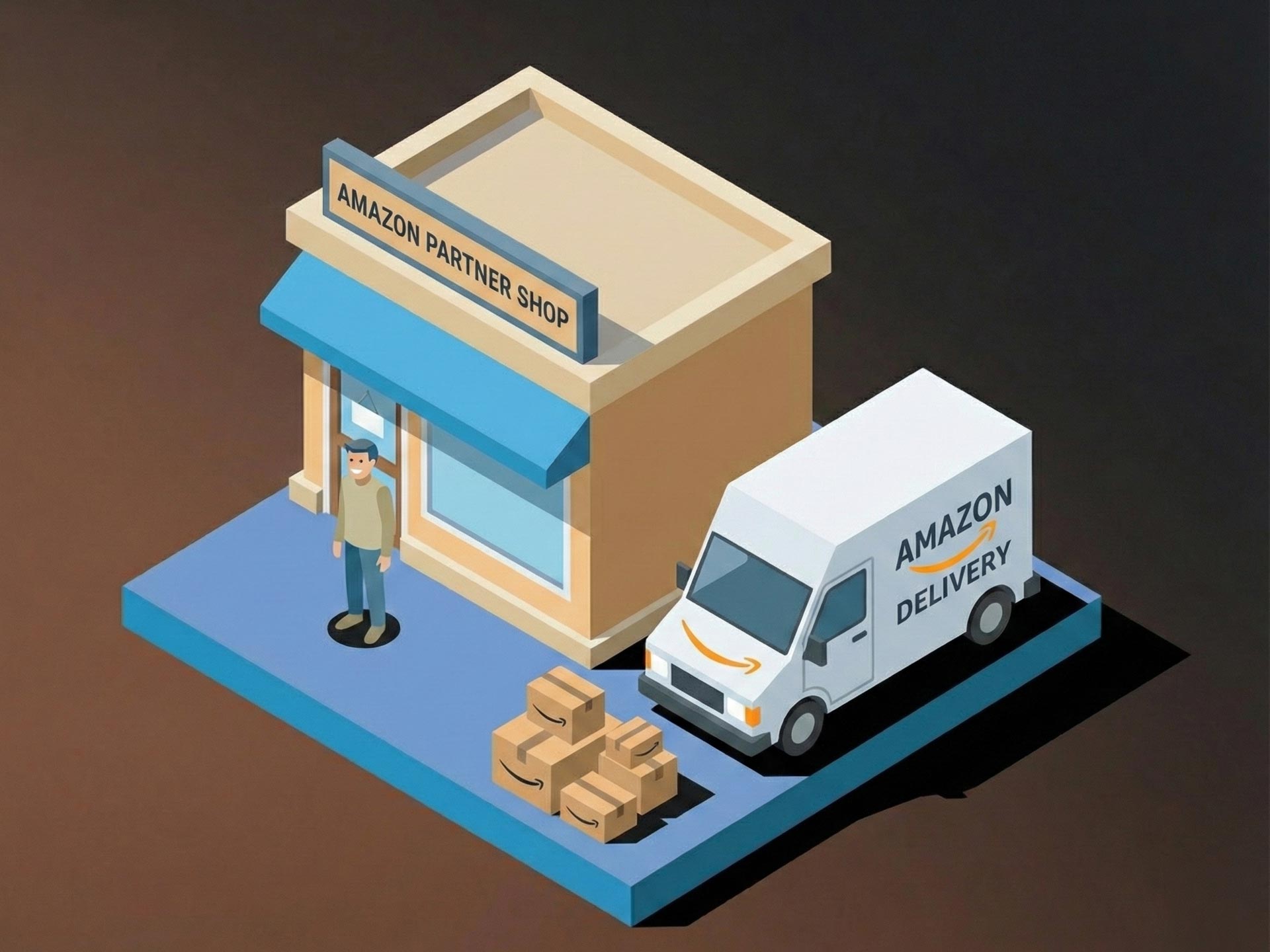


That’s where Amazon Multi channel Fulfillment (MCF) enters the picture.
This guide explains exactly how it works, when it makes sense, when it doesn’t, and how to decide if it fits your operational model. For even more detail, check out our What is Amazon Multi-Channel Fulfillment? explainer.
What Is Amazon Multi Channel Fulfillment?
Amazon Multi Channel Fulfillment is a logistics service that allows merchants to store inventory in Amazon’s fulfillment network and ship orders from any sales channel, not just Amazon.
It extends Fulfillment by Amazon (FBA) by enabling brands to fulfill orders placed on:
- Their own ecommerce website
- Other marketplaces
- Social commerce channels
- Amazon itself
In simple terms:
You use Amazon’s infrastructure as your outsourced warehouse and shipping department for all sales channels.
Instead of splitting stock across multiple providers, Amazon becomes the centralized fulfillment layer.
Why Amazon Built Multi Channel Fulfillment
Modern ecommerce is omnichannel by default. Brands rarely sell in one place anymore.
Managing fragmented logistics creates three major problems:
- Inventory duplication across systems
- Higher operational costs
- Slower shipping performance
Amazon already operates one of the world’s largest fulfillment networks, so MCF allows sellers to leverage that scale rather than build their own infrastructure.
Amazon FBA vs. Amazon Multi Channel Fulfillment
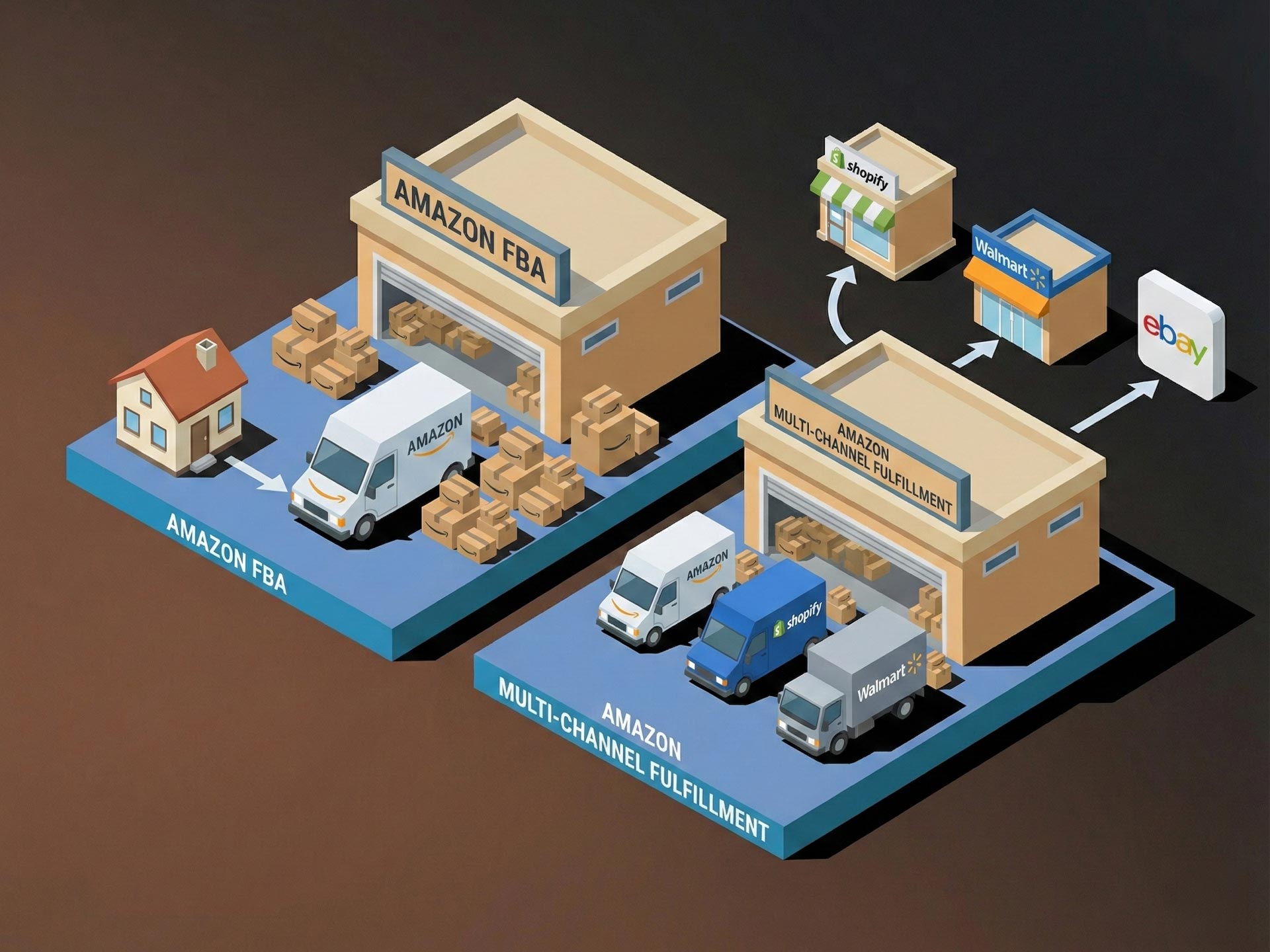
Many sellers confuse FBA and MCF because they use the same warehouse network — but their purpose is very different.
Fulfillment by Amazon (FBA) is designed specifically for orders placed on Amazon’s marketplace. Inventory stored under FBA is primarily meant to serve Amazon customers, and fulfillment is tightly integrated with Prime delivery expectations and Amazon’s internal ecosystem.
Amazon Multi Channel Fulfillment (MCF), on the other hand, allows that same inventory to be used to fulfill orders from any sales channel, including your own website or other marketplaces.
Here’s how they differ in practice:
- Order Source
- FBA fulfills only Amazon marketplace orders.
- MCF fulfills orders from any connected channel (ecommerce site, marketplaces, etc.).
- Inventory Usage
- FBA inventory is dedicated to Amazon sales.
- MCF inventory can be shared across multiple sales channels.
- Shipping Experience
- FBA is optimized for Prime delivery and Amazon-branded fulfillment.
- MCF offers multiple shipping speed options but is not always prioritized the same way as Amazon orders.
- Fee Structure
- FBA includes marketplace-related fees alongside fulfillment costs.
- MCF charges fulfillment fees specific to external channel orders.
Simple way to think about it:
FBA is marketplace fulfillment.
Amazon multi channel fulfillment is logistics infrastructure you can use everywhere.
Key takeaway:
FBA is marketplace fulfillment. MCF is infrastructure outsourcing.
How Amazon Multi Channel Fulfillment Works (Step-by-Step)
Operationally, MCF functions much like a third-party logistics provider (3PL).
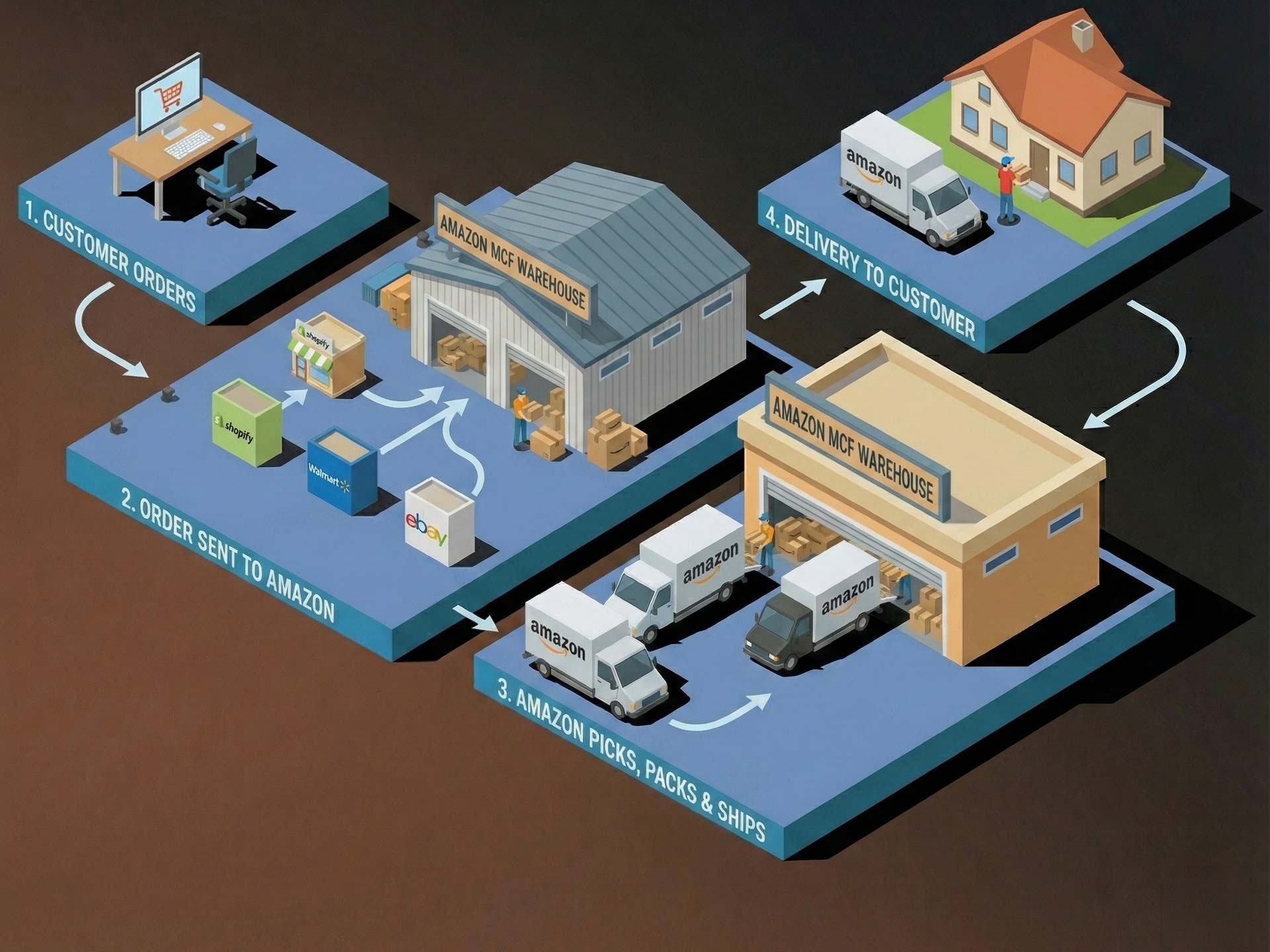
1. Send Inventory to Amazon Warehouses
Sellers ship products to Amazon fulfillment centers for storage.
Amazon can distribute inventory across its network, either automatically for a fee or manually by the seller.
You then pay monthly storage costs based on the space used.
2. Connect Your Sales Channels
MCF integrates with ecommerce platforms so orders from external channels flow directly into Amazon’s system.
Once integrated:
- Orders are automatically routed to Amazon
- Inventory syncs across channels
- Fulfillment becomes centralized
3. Amazon Picks, Packs, and Ships
When an order is received, Amazon handles:
- Picking items from inventory
- Packaging the order
- Shipping to the customer
Sellers can choose different delivery speeds (e.g., expedited or standard).
Important nuance:
Amazon prioritizes FBA marketplace orders over MCF orders.
That prioritization can affect delivery timelines for non-Amazon sales.
4. You Manage Customer Experience
Unlike marketplace orders, MCF does not include customer support, so merchants must handle service, returns, and communication themselves.
Amazon Multi Channel Fulfillment Pricing Explained
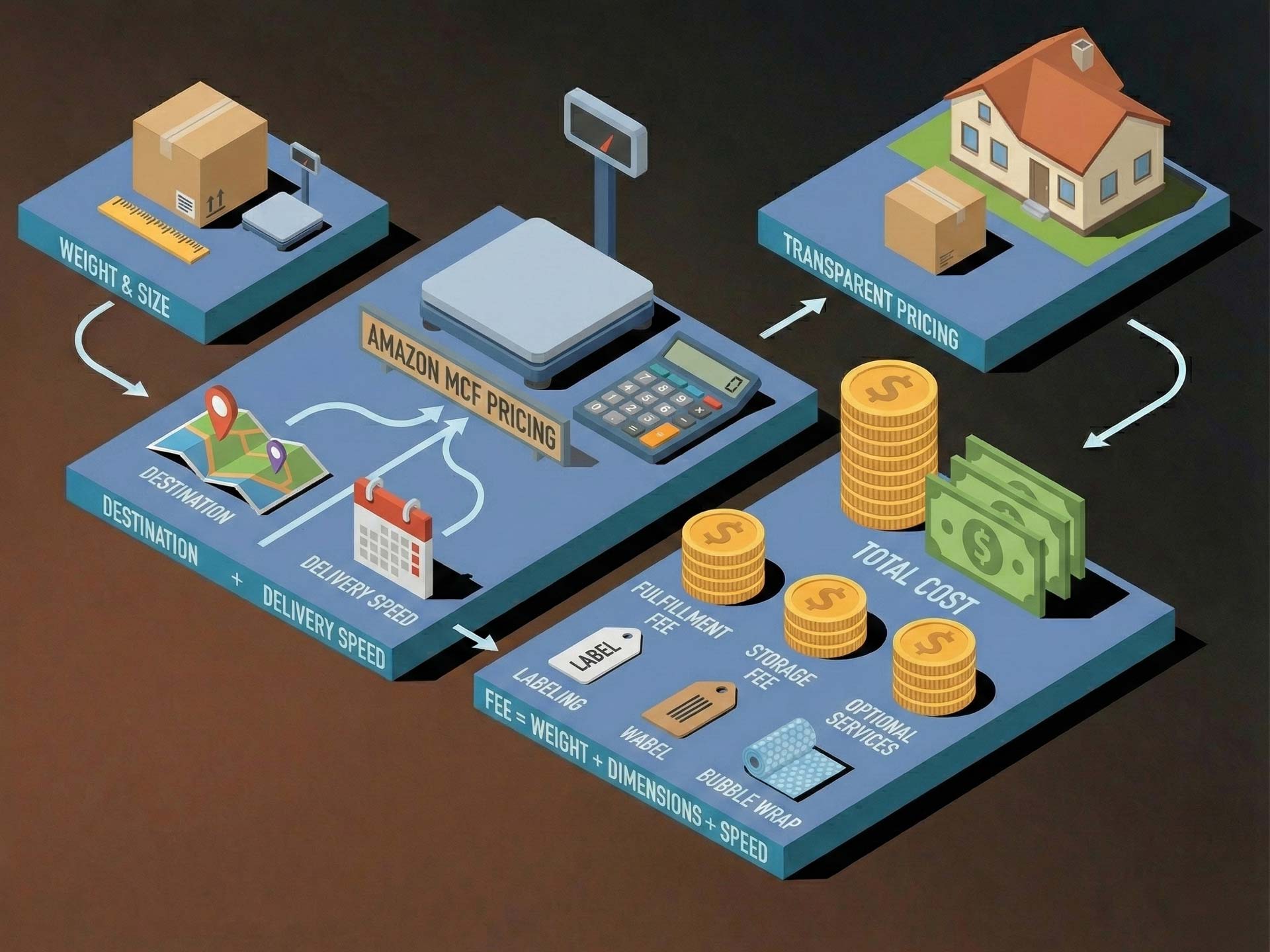
MCF operates on a fee-based structure with multiple cost layers.
Storage Fees
You pay monthly storage fees based on inventory volume, with possible long-term storage charges if products sit too long.
Rates increase during peak seasons, which can impact margins.
Fulfillment Fees
Per-order fulfillment pricing depends on:
- Product size and dimensions
- Weight and shipping weight
- Units per order
- Selected shipping speed
There are discounts for multi-unit orders.
Additional Costs to Consider
MCF may include:
- Inbound inventory receiving fees
- Inventory removal fees
- Peak season surcharges
These layered costs mean MCF pricing must be modeled carefully before adoption.
Shipping Capabilities and Limitations
Amazon’s logistics network enables fast delivery expectations, which customers increasingly demand.
However, there are important constraints:
- MCF is primarily designed for domestic U.S. fulfillment.
- International shipments may involve major surcharges or require alternative setups.
This makes MCF less suitable for brands with global distribution needs.

Advantages of Amazon Multi Channel Fulfillment
1. Centralized Inventory Management
You store all products in one fulfillment network instead of managing multiple warehouse
2. Access to Amazon’s Logistics Scale
Amazon’s operational infrastructure is optimized for efficiency and speed at enormous scale.
Few providers can match its physical footprint.
3. Faster Delivery Expectations
Amazon has effectively set the modern standard for expedited shipping, influencing customer expectations across ecommerce.
Using MCF lets brands align with those expectations without building their own network.
4. Reduced Operational Complexity
You outsource warehousing, picking, packing, and shipping — freeing internal teams to focus on growth activities.
Disadvantages of Amazon Multi Channel Fulfillment
This is where many brands underestimate the tradeoffs.
1. Limited Customer Relationship Ownership
Using Amazon logistics can reduce direct control over customer experience and data — a concern raised by some merchants evaluating platform dependence.
2. Restricted Product Categories
Certain product categories may face approval requirements or limitations.
3. Domestic Fulfillment Bias
MCF is not designed as a comprehensive global fulfillment solution.
4. No Built-In Customer Support
Sellers must independently manage returns, refunds, and service workflows.
5. Cost Volatility
Seasonal storage rate increases and peak surcharges can compress margins during high-volume periods.
When Amazon Multi Channel Fulfillment Makes Sense
MCF is typically a strong fit if you:
- Already sell heavily on Amazon
- Want to consolidate fulfillment infrastructure
- Need fast shipping without building logistics internally
- Operate primarily in one region
It works best as an operational efficiency play, not necessarily a strategic independence play.
When It Doesn’t Make Sense
MCF may not be ideal if you:
- Need global fulfillment coverage
- Want complete brand control over packaging and CX
- Require predictable, simplified pricing
- Want to diversify away from Amazon dependency
Many brands ultimately adopt hybrid models rather than relying exclusively on MCF.

Best Practices for Using Amazon Multi Channel Fulfillment Successfully
Treat Amazon as Infrastructure, Not Strategy
Use it to execute logistics — not define your channel model.
Model True Costs Before Committing
Include:
- Storage variability
- Peak surcharges
- Removal fees
- Channel shipping differences
Most merchants underestimate fulfillment math.
Maintain Independent Customer Experience Systems
Because MCF does not handle support, you must build your own CX workflows.
Diversify Fulfillment Risk
Relying entirely on one ecosystem can create operational fragility — even if it’s highly efficient.
The Strategic Question Behind Amazon Multi Channel Fulfillment
MCF is less about shipping and more about control vs. convenience.
You are trading:
✔ Operational simplicity
✔ Infrastructure access
✔ Speed to scale
for:
✖ Reduced autonomy
✖ Platform dependence
✖ Less flexibility long-term
That’s not inherently good or bad — it’s situational.
Frequently Asked Questions
Can You Use Amazon Fulfillment Without Selling on Amazon?
Yes. You still need an Amazon Seller Central account, but you are not required to sell products on the marketplace to use fulfillment services.
Is Amazon Multi Channel Fulfillment the Same as a 3PL?
Operationally similar, but structurally different.
A traditional 3PL works for you.
Amazon operates a shared infrastructure optimized primarily for its own ecosystem.
Does Amazon Multi Channel Fulfillment Handle Returns?
MCF does not provide built-in customer support or returns management, so sellers must manage those processes themselves.
Final Thoughts: Is Amazon Multi Channel Fulfillment Worth It?
Amazon multi channel fulfillment is best viewed as a logistics accelerator, not a business model.
It allows brands to plug into one of the most advanced fulfillment networks in the world, but that convenience comes with tradeoffs around flexibility, control, and long-term scalability.
For some companies, it’s the fastest way to operational maturity.
For others, it’s a stepping stone before building a more diversified fulfillment strategy.
The right decision depends less on shipping, and more on how much independence your business needs as it grows.